Anthony John Sissian’s “Frequency of Light” Turns Healing Into a Dancefloor Revelation
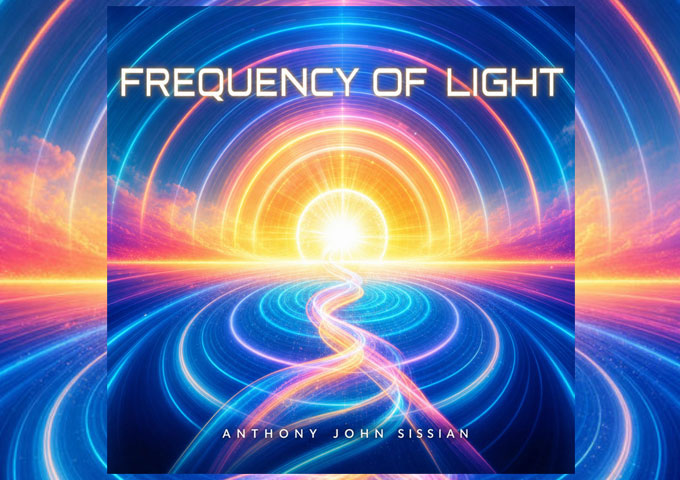
A radiant celebration of emotional renewal and inner freedom. Anthony John Sissian transforms healing into movement and sound. Euphoric vocals, luminous piano and retro synths create a vivid electronic atmosphere. The lyrics confront recurring emotional patterns while reclaiming personal sovereignty. “Frequency of Light” turns dance music into an anthem for transformation and release.
Anthony John Sissian understands something fundamental about dance music: liberation does not always arrive quietly. Sometimes it arrives as a surge of rhythm, a glowing chord progression, a vocal hook that refuses to leave the mind, or a beat that seems to physically push old emotional patterns out of the body. On “Frequency of Light,” healing becomes an active experience rather than an abstract ideal, and the result is a bright, euphoric dance/EDM track that turns emotional rebirth into something listeners can feel with their entire bodies.
The song immediately establishes its central idea through repetition. “This is the frequency of light” functions not simply as a chorus line, but almost as a mantra. Its recurrence gives the track a ritualistic quality, while the electronic production keeps that ritual firmly rooted in the dancefloor. Euphoric female vocals bring warmth and lift to the composition, radiant piano supplies much of its emotional brightness, and retro synth textures give the production a nostalgic electronic shimmer. When the arrangement builds toward its powerful drop, the music provides a physical counterpart to the song’s lyrical insistence on release.
That relationship between message and movement is what makes “Frequency of Light” particularly effective. The track does not merely tell the listener that freedom is possible. It attempts to create the sensation of freedom through its construction. The tension of the verses, the anticipation of the build and the arrival of the chorus and drop mirror an emotional progression from confinement toward release.
The lyrics begin with an image of transformation. The reference to painting blue across the face and surrounding oneself with “pure blue light” introduces a visual vocabulary that immediately separates the song from conventional heartbreak narratives. Blue can suggest sadness, tranquility, spirituality, atmosphere or expansive space, and Sissian uses that ambiguity to create a landscape in which emotional pain can be confronted without becoming the entire identity of the person experiencing it.
The more revealing lyrical idea arrives with the image of “loops.” The song recognizes the exhausting tendency to repeat emotional experiences, behaviors and conversations. The line about having “no loops to turn to” and the promise that “we’ll break away” establish the central conflict. This is not simply a song about feeling better. It is about recognizing repetition and choosing not to remain trapped inside it.
That makes the chorus more significant than its deceptively simple wording might initially suggest. The “frequency of light” becomes a metaphor for a different internal state, while the “current” in the mind suggests energy, thought and consciousness moving in a new direction. The language is deliberately elemental. Light. Current. Mind. These are broad concepts, but their simplicity gives the production room to amplify them. Rather than burying the listener beneath complicated imagery, Sissian uses a handful of recurring ideas and lets their emotional implications expand through repetition.
The song’s healing perspective is also distinctly communal. The lyrics address another person directly, offering reassurance and connection alongside personal transformation. The promise to ease someone’s pain and feel the sun shining again makes renewal feel shared rather than solitary. That matters because emotional freedom is rarely presented here as total withdrawal from the world. Instead, connection becomes part of the process of reclaiming oneself.
Verse two takes the concept further by introducing perhaps the song’s most important phrase: the “sovereign soul.” Sovereignty changes the emotional scale of the song. Healing is no longer merely recovery from pain. It becomes the reclamation of authority over one’s own inner world. The lyrics imagine leaving shadows behind, being “armed in our gold,” ruling a sovereign land and writing names across the air. These images feel intentionally larger than everyday reality, almost mythic in their proportions, as if the individual emerging from an emotional cycle has entered a new personal mythology.
Gold provides an especially striking contrast with the earlier blue imagery. Blue establishes the luminous atmosphere, while gold introduces value, strength and radiance. Together, the colors create a visual progression from emotional space toward self-possession. The lyrics do not describe healing as becoming untouched by pain. Instead, they suggest becoming strong enough to stop allowing pain to dictate the next chapter.
The declaration that “we will write our names across the air” is equally telling. Air cannot permanently hold a name, so the image carries an ephemeral quality, but it also suggests freedom from physical and emotional limitations. The act of writing across air becomes symbolic of making one’s presence known without needing permission from the structures that previously contained it.
The following references to healing worry and clearing cold despair continue that movement. Yet “Frequency of Light” avoids becoming overly solemn because its musical identity remains joyful. This is where the euphoric vocals and dance production become essential. The arrangement gives the lyrics a sense of celebration rather than therapy-session introspection. The listener is not being asked simply to examine pain. They are being invited to move beyond it.
The recurring build, with its anticipation of something that wants to be said, creates another subtle tension. It suggests that transformation begins when an internal truth can finally be expressed. The repeated chorus then becomes an emotional release valve. The production and lyric structure effectively perform the process they describe: pressure gathers, recognition emerges, and release follows.
Even the closing lines introduce an intriguing final shift. “Just a game,” “be silent,” and “grow strong” leave the song with a more enigmatic quality than the triumphant chorus might suggest. Rather than spelling out every answer, Sissian ends by reducing the message to fragments of instruction. The journey toward freedom still requires discipline, reflection and strength. The light is not presented as a magical cure. It is a frequency to enter, sustain and embody.
That conceptual ambition is unsurprising given Anthony John Sissian’s unusually broad creative and professional background. An Australian polymath, technology entrepreneur and commercial litigator, Sissian brings together disciplines that would rarely occupy the same artistic biography. His musical pedigree reaches into classical composition, experimental sound design and dramatic performance, while his NIDA training in music theatre established an early foundation in expressive performance.
His professional career has included work as a Solicitor and Barrister of the High Court of Australia, Principal of Sissian & Associates and former Head of Litigation Oceania for Ernst & Young. Alongside that legal career, he has pursued technological innovation through ventures including Procon Telematics and proprietary AI data patents. That combination of systems thinking and artistic experimentation offers an interesting context for music concerned with cycles, currents, structures and transformation.
His classical credentials are equally notable. In 2015, his string octet “The Whistler” was premiered by the Sydney Lawyers Orchestra alongside historical works by Mozart, Handel and Telemann. In April 2026, Mexico’s Cosmonauta Radio published an exceptionally enthusiastic review of his symphonic work, describing it in highly elevated terms and placing its artistic ambition in a monumental context.
Yet “Frequency of Light” demonstrates that Sissian is not interested in remaining confined to one musical vocabulary. Operating independently through his Aurora Sentient imprint, he brings the same appetite for structure and experimentation into contemporary electronic music. Here, sophisticated conceptual thinking is placed inside an accessible dance framework, allowing the song’s themes to communicate immediately without sacrificing depth.
Ultimately, “Frequency of Light” works because its central metaphor is never treated as decoration. Light represents renewal, the current represents consciousness, movement represents release, and sovereignty represents the recovery of self-determination. The music binds those ideas together through glowing piano, vintage synth colors, energized rhythms, euphoric vocals and a drop designed to feel like a door opening.
Anthony John Sissian has created more than a feel-good dance track. “Frequency of Light” is an invitation to recognize the loops that keep repeating, step outside them and rediscover the exhilarating possibility of becoming fully present again. Its message is optimistic without being passive, spiritual without abandoning the dancefloor, and emotionally purposeful without losing its sense of fun. The song’s ultimate statement is simple but potent: healing can move, healing can shine, and sometimes the first real sign of freedom is the moment the body starts dancing again.
OFFICIAL LINKS: SPOTIFY – APPLE MUSIC