
SENATOR Resurfaces From the Underground With “25 Cells,” a Hypnotic Post-Punk Transmission From the Past
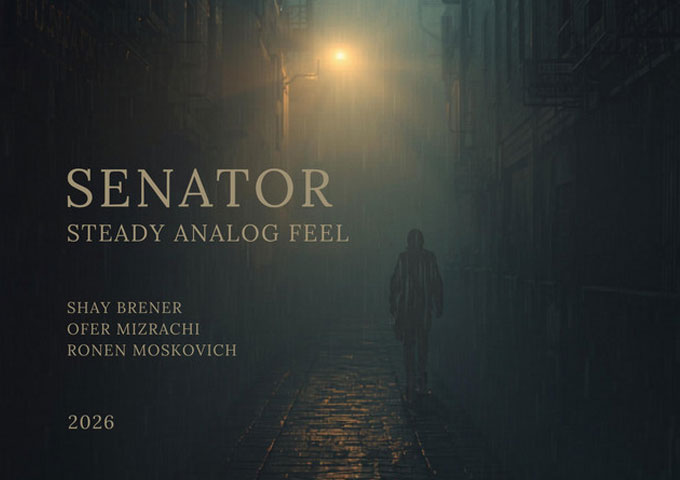
Four decades after the Penguin Club scene first heard them, the band returns with a cold, driving single that turns memory into rhythm. “25 Cells” fuses distorted guitars with EDM propulsion to explore obsession, repetition, and the search for meaning inside routine. It’s the first taste of “Steady Analog Feel,” an album built from vintage tape and rebuilt for the present.
SENATOR was never supposed to come back. The band existed briefly in the 1980s, playing the shadowy corners of the legendary Penguin Club scene, one of those underground post-punk projects that burned fast and left behind little more than a handful of cassette tapes and the memory of a sound nobody quite managed to replicate. That sound belonged to guitarist and vocalist Ofer MizraChi, alongside bandmates Shay Brener and Ronen Moskovich, three musicians chasing something raw and unfiltered in a scene that thrived on exactly that kind of hunger.
Decades later, MizraChi, now known for his work as a multidisciplinary visual and sonic artist, went looking for those old tapes. What he found was more than nostalgia. Buried in the vintage cassette boxes were original vocal tracks and stems, fragments of a band that had never finished telling its story. Rather than let them stay archived, MizraChi extracted what he could, rebuilt what the tape had degraded, wrote new lyrics, composed fresh arrangements, and constructed a bridge between the band’s raw analog roots and a modern production sensibility. The result is “Steady Analog Feel,” SENATOR’s new full-length album, and its lead single, “25 Cells,” is the clearest signal yet of what that bridge sounds like.
“25 Cells” opens with a pulse. Not a melody exactly, more like a heartbeat caught in a loop, a heavy and hypnotic EDM beat that drives the track forward with mechanical patience. Distorted guitars cut through that pulse in jagged bursts, a direct inheritance from the band’s post-punk origins, while the vocals sit somewhere between confession and static, raw in the way only something recovered from analog tape can be. It’s a fascinating collision of eras. The bones of the song are unmistakably rooted in the minimalist, tension-driven aesthetic of early 1980s underground rock, but the flesh on those bones is entirely contemporary, built for a dancefloor as much as for headphones in the dark.
Thematically, the track is where things get genuinely interesting. “25 Cells” is not a song about a single event or a single relationship. It is a song about repetition itself, about the way modern life reduces experience to routine, and about the strange comfort and horror of communication that has gone cold. There’s a recurring motif in the lyrics built around the phrase “twenty five,” which surfaces again and again like a signal caught in a loop, or a number that has lodged itself in someone’s memory without explanation. It functions almost like a glitch in the track’s own transmission, an obsession the narrator can’t quite shake, and one MizraChi wisely refuses to explain outright. The number never resolves into a tidy meaning. It could be a cell block, a phone extension, a countdown, a memory fragment stuck on repeat. That ambiguity is the point. The song mirrors its own subject matter, a repeating signal searching for meaning, by refusing to hand the listener an easy answer.
What makes the writing compelling is how it treats coldness not as an absence of feeling but as a kind of feeling in itself. The lyrics move through imagery of routine and disconnection, the numbness that comes from repeating the same motions, the same words, the same signals, until they stop meaning anything at all. There’s a tension running underneath it, a narrator who seems aware that something has gone mechanical inside them and is trying, almost against their will, to locate the human pulse still buried under all that static. That’s a very post-punk instinct, the idea that alienation itself can be danceable, that you can build a track around emotional distance and still make bodies move. SENATOR understood that instinct in the 1980s, and “25 Cells” proves the instinct survived the decades intact.
Musically, the production leans into that duality. The minimalist post-punk skeleton keeps things tense and stripped down, nothing overplayed, nothing wasted. Layered over it are experimental indie textures that feel almost like static interference, small distortions and atmospheric touches that give the track its cold, analog character even though it was built with modern tools. And underneath all of it sits that dancefloor rhythm, steady and unrelenting, which keeps the song from ever tipping into pure abstraction. It’s a difficult balance to strike, a song that’s simultaneously moody and physical, cerebral and rhythmic, but “25 Cells” manages it with real confidence.
MizraChi has also directed a cinematic music video for the single, one built to match its chilled, nostalgic visual atmosphere. Knowing his broader artistic practice, that pairing makes sense. He’s an artist who works across mediums specifically to communicate feeling in layered, immersive ways, and a song this obsessed with signal, repetition, and cold transmission clearly demands a visual language that mirrors those same qualities. The video isn’t just an accompaniment, it’s part of how the song’s meaning gets completed.
“25 Cells” is the opening transmission from “Steady Analog Feel,” an album that promises to move through post-punk energy, electronic experimentation, atmospheric soundscapes, and minimalist songwriting in equal measure. According to the band, each track explores a different corner of memory, repetition, motion, and human connection, and if this lead single is any indication, the album is shaping up to be a genuinely thoughtful meditation on what gets lost and what survives when the past is rebuilt with present day tools.
There’s something quietly moving about the whole project once you understand its origin. This isn’t a band cashing in on nostalgia or chasing a reunion tour. It’s one artist going back into old tape boxes, pulling out fragments of a sound that almost disappeared entirely, and giving it a second life with the same restless curiosity that seems to define everything MizraChi touches. SENATOR began in a club that no longer exists, playing to a scene that has long since scattered. That the band’s voice survived on cassette, waiting more than forty years to be heard again, only makes “25 Cells” feel more urgent now that it finally has been.
For fans of post-punk minimalism, cold wave atmospheres, and electronic music that isn’t afraid to sit in discomfort, “25 Cells” is a genuinely rewarding listen, and a strong signal that SENATOR’s return is worth paying close attention to.
OFFICIAL LINKS: FACEBOOK – X – SPOTIFY – INSTAGRAM – YOUTUBE – TIKTOK