Saint Louis Pulls You Under and Sets You Free with “Dancing with the Dark Inside”
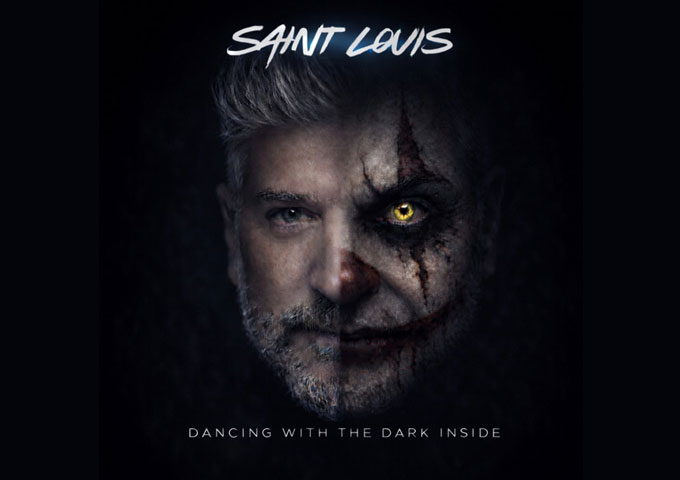
There is a particular kind of electronic music that does more than move the body. It reaches somewhere deeper, past the rational mind, into the place where instinct and emotion live tangled together. Saint Louis, the Italian producer and artist born Emanuele Vallorani, has made exactly that kind of record with his latest single, “Dancing with the Dark Inside” — a melodic electronic and dance track that carries the weight of something genuinely felt, wrapped inside a production built to ignite a dancefloor.
From the first beat, “Dancing with the Dark Inside” signals that it is operating in a different register than your average club record. The architecture of the track draws from melodic house, progressive house, dance-pop, and the darker edges of electronic music, and Saint Louis navigates all of these territories with the confidence of a producer who knows exactly where he is going. Throbbing basslines drive the track forward with an almost hypnotic insistence, while powerful synth sweeps rise and fall like tidal forces, creating that distinctive sensation of being simultaneously lifted and submerged. The beat itself is relentless but never mechanical — there is a pulse to it, something almost biological, as though the track itself has a heartbeat.
What truly separates this record from the crowded landscape of contemporary electronic music is the vocal performance sitting at its center. The lead voice moves through the song in two distinct emotional registers — a moody, introspective quality in the verses gives way to something far more expansive and urgent in the choruses. That contrast is not accidental. It mirrors the central tension of the song itself, the push and pull between surrender and resistance, between what lies beneath the surface and what the light reveals.
Lyrically, “Dancing with the Dark Inside” is a remarkably layered piece of writing for a dance track. The opening verses establish an almost trance-like state of self-dissolution, describing sensation moving slowly through the body, something deliberate and almost ceremonial in the way awareness bleeds outward. Sound itself becomes a physical force in these lines — not something heard but something inhabited, something that draws the narrator downward, underground, into a space beneath ordinary consciousness. There is a curious peace in that descent, though, a softness to the imagery that keeps it from tipping into dread. Whatever is underground here is not threatening so much as magnetic.
The second verse mirrors the first almost structurally but introduces a new emotional frequency — something unidentified cries out, something feels strange, yet the compulsion to follow the sound deeper remains unchanged. Saint Louis uses this repetition brilliantly, not as laziness but as ritual. Each return to the same phrase reinforces the sense of a mind caught in a loop it cannot and perhaps does not want to escape. The whispered presence moving through the air, the sense of something waking everywhere — these images speak to a moment of heightened sensitivity, when the world seems alive with signals that exist just beyond the edge of understanding.
The chorus arrives as a release valve, the word “crazy” functioning not as self-deprecation but as a kind of ecstatic acknowledgment. Yes, this is irrational. Yes, it defies explanation. And yes, the fire in the sound is real regardless. The invitation to dance with the dark inside is not a descent into madness but a declaration of honesty — an admission that whatever shadow lives within us is not separate from who we are but intrinsic to it. The round and round motion of the chorus reflects that same circular pull, the dancefloor as a space where the usual forward momentum of life is suspended and pure sensation takes over.
The bridge is where the song earns its most compelling territory. Hidden voices in the beat, silent shadows in the heat — the dancefloor transforms in these lines into something closer to a threshold between states of being. Rhythms draw the narrator toward things almost heard, things that live in the space between sound and silence. The heartbeat and the bassline become indistinguishable here, and the imagery of something rising from the ground, shadows calling from within, gives the track its most visceral and genuinely unsettling emotional texture. Crucially, the line about having nowhere left to hide does not arrive as a threat. It arrives as relief. The hiding is over. The dark inside has been acknowledged, danced with, integrated.
This is the philosophical core of what Saint Louis has built here. “Dancing with the Dark Inside” is not a song about darkness as enemy. It is a song about darkness as self — the repressed, the unnamed, the emotional undercurrent that pulses beneath the polished surface of everyday life. The dancefloor, in Saint Louis‘s vision, becomes the arena where that acknowledgment happens, where the fire in the sound gives permission to feel everything that normally goes unfelt.
Emanuele Vallorani has been steadily developing a sonic identity that blends dance energy with cinematic texture, and “Dancing with the Dark Inside” represents that vision operating at its fullest. This is a record with genuine artistic ambition dressed in the clothes of a club anthem, and it wears that combination without contradiction. In the lineage of producers who have used the dancefloor as a space for emotional truth — from the early house pioneers to the current generation of melodic electronic architects — Saint Louis is staking his claim with real conviction.
“Dancing with the Dark Inside” is a track for the early hours, for the moment when the crowd stops performing and simply exists together in the sound. It is a record about what happens when you stop running from yourself and let the music take you somewhere honest. That is, ultimately, what the best electronic music has always done. Saint Louis knows it, and here, he delivers.