John J Lyons Makes Romance Beautifully Awkward on “Bad Moves”
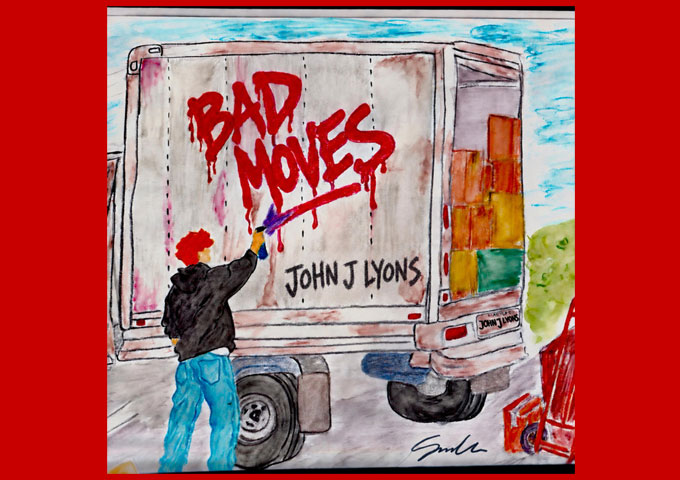
A bright, infectious electro-pop release captures the wonderfully unpredictable nature of having a crush. John J Lyons transforms stolen glances and nervous conversations into an energetic celebration of youthful attraction. Blending contemporary alt-pop production with an immediately engaging melodic sensibility, “Bad Moves” finds its charm in the imperfections of romance. At just 13 years old, the Annapolis, Maryland-based artist demonstrates an instinct for connecting everyday experiences with relatable songwriting. Sometimes, getting everything wrong is exactly what makes a moment feel right.
Having a crush can be an unexpectedly complicated business. A person who normally has no trouble holding a conversation suddenly forgets how to speak, eye contact becomes an elaborate tactical exercise, and even the simplest interaction can inspire hours of retrospective analysis. It is this wonderfully familiar contradiction between excitement and self-consciousness that provides the inspiration for John J Lyons and his infectious new single, “Bad Moves.” Rather than presenting young romance through an overly polished or idealized lens, Lyons embraces its awkwardness, capturing the little mishaps, nervous impulses, and imagined disasters that accompany the realization that someone has become considerably more important than expected.
At the heart of the song is an experience that needs very little explanation. You notice someone looking in your direction, they catch your eye, and suddenly your attention is elsewhere, usually on a phone that has no legitimate reason to be occupying your hands. When an opportunity to speak finally arrives, the pressure becomes almost comical. Words that seemed perfectly reasonable moments earlier disappear, replaced by hesitant responses and conversations that are inevitably replayed afterward with a list of things you wish you had said. Lyons understands that these seemingly insignificant situations can feel enormous when emotions are involved. His songwriting finds humor in the disproportionate importance we assign to small interactions, without dismissing the genuine feelings underneath them.
The lyrical appeal of “Bad Moves” comes from its ability to balance romantic anticipation with self-deprecating honesty. Instead of relying on grand declarations or familiar expressions of devotion, Lyons focuses on the behavioral details that make attraction so recognizable. The stolen glances, sudden changes in body language, and instinctive attempts to appear completely unaffected create a sequence of moments that feels spontaneous and believable. There is something particularly effective about the contrast between what the narrator thinks is happening and what might actually be taking place. In his own mind, every gesture is potentially disastrous, every sentence an opportunity for embarrassment, and every silence a reason to question his social abilities.
The central image of making bad moves under good lights brings the song’s entire concept together. It suggests a setting filled with possibility, where the atmosphere is inviting and the excitement of being close to someone special makes even ordinary circumstances feel extraordinary. Yet the narrator remains convinced that he is somehow getting everything wrong. The irony is that the other person is still smiling, still sitting beside him, and perhaps experiencing precisely the same nervous uncertainty. This subtle shift in perspective gives the songwriting an appealing warmth. What initially feels like a personal failure might simply be two people trying to figure each other out.
Musically, “Bad Moves” complements its subject matter with an upbeat electro-pop and alternative-pop arrangement that emphasizes movement, brightness, and melodic immediacy. Its steady four-on-the-floor rhythmic foundation establishes an accessible dance-oriented pulse, while crisp, syncopated hi-hats introduce additional energy without overcrowding the groove. The restrained snare accents provide a familiar pop framework, and the occasional percussive details give the arrangement enough variation to maintain its momentum. This rhythmic consistency allows the song to remain lively while keeping the songwriting firmly at the forefront.
The instrumental palette adds another layer of personality. Muted guitar textures occupy the middle frequencies, creating a softer counterbalance to the brighter electronic elements, while warm, sustained synth pads provide depth beneath the more sharply defined melodic details. A recurring arpeggiated synth figure supplies an identifiable hook, its subtle pitch movement giving the arrangement a little extra character. Meanwhile, the compact bassline works closely with the kick drum, reinforcing the track’s forward motion without competing with its melodic components. The production demonstrates an appreciation for space and contrast, allowing the different textures to contribute to a cohesive rather than unnecessarily crowded sound.
One particularly effective aspect of the arrangement is its handling of atmosphere. The polished electronic surfaces are balanced by restrained rhythmic elements, while subtle reverberation lends the production a sense of spaciousness. The bridge introduces a filtered transition that briefly pulls back the arrangement’s frequency range, creating anticipation before the fuller instrumental returns. It is a straightforward but effective structural decision, reinforcing the song’s emotional momentum without distracting from its central hook. The combination of glossy synth work, clean percussion, and accessible melodic construction gives “Bad Moves” a contemporary identity that sits comfortably within the wider electro-pop and alt-pop landscape.
Perhaps the most interesting development arrives as the song’s perspective begins to change. Initially, the narrator is consumed by uncertainty, measuring every interaction against an imaginary standard of how someone should behave when they like another person. By the closing stages, however, that self-consciousness begins to loosen. The realization that genuine attraction does not depend on delivering the perfect sentence or making every correct move provides a satisfying resolution. It is a simple but valuable message, particularly because it emerges naturally from the situations established throughout the song rather than being imposed as an obvious moral.
At just 13 years old, John J Lyons is already building upon experience gained through performing with a band and participating extensively in musical theater. His move toward more mainstream music represents an exciting opportunity to explore contemporary songwriting and production while developing an individual artistic identity. “Bad Moves” offers an encouraging indication of that direction, demonstrating an ability to take a relatable personal experience and shape it into an engaging pop release with an accessible musical personality.
Ultimately, the appeal of “Bad Moves” lies in its understanding that romance rarely follows a perfectly rehearsed script. Sometimes, the person you like makes you forget how to behave, and sometimes the most memorable moments happen precisely because neither of you knows what to do next. With its buoyant electronic production, playful lyrical perspective, and reassuring final message, John J Lyons delivers a single that celebrates the delightful imperfections of attraction. After all, if someone is still smiling and choosing to sit beside you, perhaps those supposedly terrible moves aren’t so bad after all.
OFFICIAL LINKS: SPOTIFY – INSTAGRAM – APPLE MUSIC