
Kappiya Unleashes the Beast With The Underground Anthem “Kappiya”
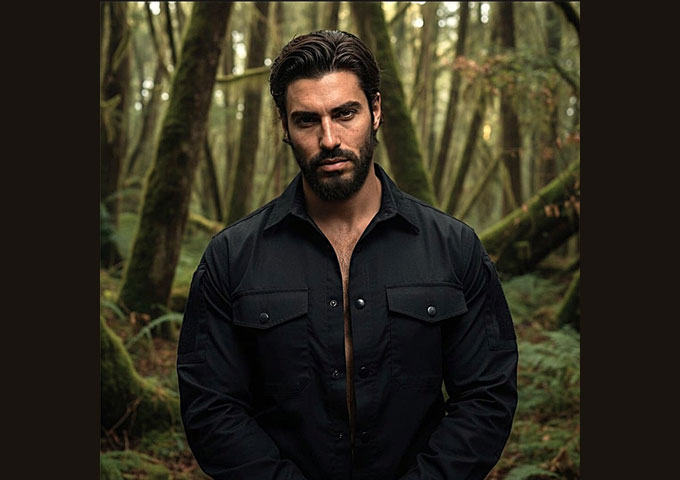
There is something deeply unsettling about a piece of music that feels like it is watching you. Kappiya’s debut single “Kappiya” does exactly that, and it does so with the kind of cold, calculated precision that only someone who has stared genuine chaos in the face could conjure. Born from the fog-draped wilderness of Virginia’s Shenandoah Valley, this ex-military artist has taken the psychological residue of frontline service and weaponized it into one of the most viscerally compelling EDM tracks to emerge from the underground in recent memory.
Kappiya is, by every definition, an anomaly. In a music landscape increasingly governed by algorithmic dependency and social media performance, he has deliberately severed every digital tether. No Instagram grid. No curated persona. No hashtag strategy. His rebellion is not merely sonic, it is philosophical. The machine of war failed him, and he refuses to feed the machine of modern attention culture in return. If you want to find Kappiya, you go looking in the music itself. And in “Kappiya”, there is plenty to find.
The track opens with immediate intent. A resonating synth bass motif coils through the speakers like smoke under a locked door, and from the very first bar, you understand that this is not a dancefloor record designed to make you feel good. It is designed to make you feel pursued. The production is hypnotic in the truest sense of the word, drawing from tribal percussion traditions and wrapping them in a trance-adjacent atmosphere that manages to feel both ancient and ruthlessly modern. The drums do not simply drive the track forward, they hunt. The rhythm is incessant, relentless, almost ritualistic, the kind of pulse that bypasses rational thought and speaks directly to something older and more primal in the human nervous system.
What makes “Kappiya” particularly arresting is the vocal dynamic at its sonic heart. Kappiya delivers the lead vocal in a low, dark-toned conversational register that feels less like singing and more like a confession being made in a dimly lit room. There is no melodic grandstanding here, only weight. He speaks of shadows stretching, of bodies bleeding, of planting seeds in someone’s mind, imagery that evokes both the psychological aftermath of combat and something more predatory and mythological. When he describes this city as his maze and the listener as terrified within it, the narrative takes on an almost folkloric tension, a hunter and hunted dynamic that propels the entire track.

The entrance of featured vocalist Kassandra shifts the power dynamic in genuinely surprising ways. Where Kappiya’s verses position him as the dominant, omnipresent force, Kassandra’s almost whispered responses gradually reveal themselves to be something far more formidable than mere echo. Her interjections are sparse at first, sharp and questioning, but as the track progresses she becomes increasingly sovereign. Her declarations arrive with quiet certainty, reinforcing the title name not as a boast but as an identity that cannot be undone, cannot be imprisoned, cannot be owned. The call and response structure between the two vocalists creates a genuinely theatrical tension, a push and pull of control and surrender that mirrors the pleasure and pain duality explicitly named in the lyrics.
That duality is, in fact, the emotional and conceptual spine of “Kappiya”. The lyrics oscillate between predator and prey, power and vulnerability, without ever fully resolving into either. Lines evoking paranoia, checking locks twice every night, standing in corners away from the light, are delivered not as confessions of weakness but as observations of a psychological state that Kappiya knows intimately. This is a man who has lived in hypervigilance, whose nervous system was trained to treat every shadow as a threat. The brilliance of the writing is that it is never entirely clear whether Kappiya is the hunter or the haunted. Perhaps, the song suggests, he is both simultaneously.
Kassandra’s closing vocal passages seal this ambiguity with tremendous effect. Her countdown imagery, the ticking clock, the final block, the shadow that owns the floor, transforms the track’s finale into something genuinely cinematic. The dancefloor does not stop because the music ends. It stops because someone decides it does. That shift in agency, from pursuit to absolute authority, is the moment “Kappiya” fully reveals its hand.
Sonically, the production deserves significant credit for holding all of these thematic threads together without ever losing the plot as a functional dance record. The tribal elements are not decorative, they are structural, giving the track a ceremonial weight that elevates it well above standard EDM fare. The synth work breathes and pulses rather than simply filling space, and the overall atmosphere manages the rare feat of feeling genuinely ominous without tipping into self-parody.
Kappiya has built something rare with this piece. A track that works as a physical, kinetic dancefloor experience and simultaneously as a psychologically layered piece of music with genuine emotional and narrative depth. For an artist who exists entirely outside the conventional promotional machinery, “Kappiya” is a remarkably sophisticated opening statement, proof that the most powerful introductions are sometimes made not through noise and visibility, but through presence alone. The Shenandoah Valley has been keeping a secret. It does not intend to keep it much longer.
OFFICIAL LINKS: SPOTIFY – APPLE MUSIC








Just found him on Spotify and I Love his music and VOICE!!! Any idea where to get more info on him?!